Water Heater Repair & Replacement in Wheat Ridge, CO
Last updated
On This Page
- Water Heaters in Wheat Ridge, Colorado
- Elevation & Combustion
- Water Supply and Housing Stock
- Seasonal Notes
- Tank Size and Tankless Flow
- Maintenance in Wheat Ridge
- When a Repair Still Makes Sense
- How Local Conditions Shape the Job
- Paperwork, Warranty and What to Keep
- Wheat Ridge's Post-War Homes
- Shared Flues and Furnace Upgrades
- Wheat Ridge Water
- Utility-Room Installations
- Replacement Choices
- Questions Wheat Ridge Homeowners Ask
- Getting Service in Wheat Ridge
Water Heaters in Wheat Ridge, Colorado
Wheat Ridge sits at about 5,450 feet in Jefferson County between Denver and the foothills. It developed mostly after World War II and retains many of its original post-war homes.
Elevation & Combustion
For a gas water heater, Wheat Ridge's 5,450-foot elevation, about 170 feet above Denver, means roughly 14% less input than the box promises. A 40-gallon tank here recovers about 35 gallons per hour, 88% of a coastal install, and tankless output falls to about 4.3 gpm with 45°F winter inlet water.
This part of the Front Range sits high enough that a gas water heater's venting and combustion settings deserve a specific check for this address, not a one-size-fits-all assumption.
Even within Jefferson County, elevation isn't uniform: Wheat Ridge and Denver, roughly 5 miles apart, can call for different combustion-air setups on a gas unit.
| Approximate elevation | 5,450 ft |
| Air pressure | 12.0 psi (sea level 14.7) |
| Water boils at | about 202°F |
| Typical gas input reduction* | 14% |
| 40,000 BTU tank burner, effective | ≈34,480 BTU/hr |
| 40-gal gas tank recovery (90°F rise) | ≈35 gal/hr |
| 199,000 BTU tankless, effective | ≈171,538 BTU/hr |
| Tankless flow at 120°F from 45°F winter inlet | ≈4.3 gal/min |
*Planning estimates, not a substitute for the data plate. A common manufacturer rule is about 4% less input per 1,000 ft above 2,000 ft; many current units are certified for high altitude without field changes, so the label on the specific model wins. Recovery assumes 76% efficiency; tankless flow assumes 93%.
Water Supply and Housing Stock
Water here carries the mineral load typical of the Front Range, and hardness varies by provider, enough that sediment buildup and anode rod wear are common reasons tanks in this area need attention before their nominal rated life is up.
Wheat Ridge is dominated by 1950s-60s ranches and split-levels, where water heaters are usually in basements or utility rooms that were never designed for modern high-efficiency units.
Wheat Ridge, in Jefferson County, is roughly 2 miles from Arvada, close enough to share weather patterns, not necessarily close enough to share a water provider.
Seasonal Notes
Spring and fall are the easy seasons for a water heater in Wheat Ridge; the practical time to deal with a tired unit is before November rather than during a January cold spell.
Tank Size and Tankless Flow
Tankless sizing in Wheat Ridge comes down to the temperature rise needed in winter, not the maximum flow printed on the box.
Maintenance in Wheat Ridge
A Wheat Ridge tank that pops or rumbles while heating is usually telling you sediment has built up, and a flush is overdue.
When a Repair Still Makes Sense
In Wheat Ridge, a 40-gallon gas tank takes about 69 minutes to reheat from cold and a 50-gallon about 86. If the tank empties noticeably faster than that, capacity is being lost to sediment or a failing part; beyond about twelve years of age, replacement is usually the smarter move.
That question doesn't have a county-wide answer either, a unit correctly set up for a home in Westminster, about 5 miles away in Jefferson County, isn't proof that Wheat Ridge's installation was done the same way.
How Local Conditions Shape the Job
If you're describing your location by ZIP code, 80033 places you in Jefferson County, useful shorthand for a technician working across Denver Metro who serves more than one county in a day.
Paperwork, Warranty and What to Keep
For a Wheat Ridge home, manufacturer and installer warranties are separate, so keep both sets of paperwork.
Wheat Ridge's Post-War Homes
Wheat Ridge, between Denver and the foothills in Jefferson County, was once known as Carnation City for its greenhouses and farms. It developed mostly after World War II, and much of its housing is 1950s and 1960s ranches and split-levels. Those homes typically have water heaters in basements or utility rooms, often beside the furnace and sharing its flue.
Newer infill and redevelopment, especially near the Wheat Ridge-Ward light-rail station and along 38th Avenue, add townhomes and modern single-family homes with different setups.
Shared Flues and Furnace Upgrades
When a Wheat Ridge homeowner replaces an old furnace with a high-efficiency sealed model, the water heater may be left venting alone into a chimney or metal flue sized for two appliances. That can cause poor draft and condensation. Solutions include a smaller liner, a power-vent water heater or a heat pump unit. A spillage test should be done after any change.
Wheat Ridge Water
Wheat Ridge is served by several providers, including Denver Water, Consolidated Mutual and Wheat Ridge Water District, depending on the address. Water is typical of the Front Range, and sediment and anode wear are the main factors in tank life.
Utility-Room Installations
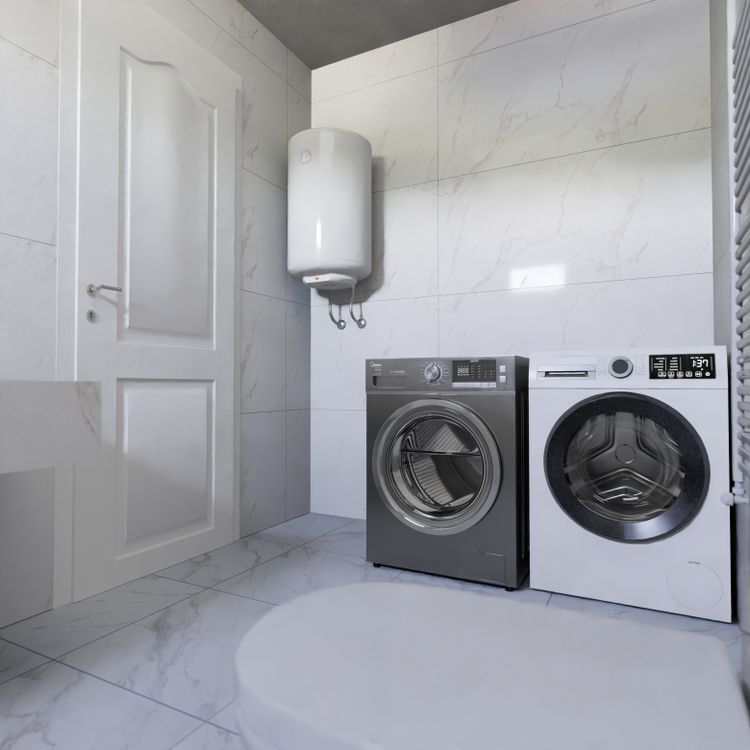
In split-levels and ranches without basements, water heaters are often in main-floor utility rooms. A leak there can damage floors and walls, so a drain pan and leak detector are worthwhile.
Replacement Choices
At about 5,450 feet, the altitude effect is moderate, as the table above shows. Like-for-like tanks are common, but heat pump units can work in basements, and tankless units may need gas line upgrades.
Questions Wheat Ridge Homeowners Ask
Is my 1950s basement install safe? A spillage test and a look at the flue connection, gas connector and relief line tell you.
Which water provider am I on? Check your bill; Wheat Ridge has several.
Can a heat pump unit go in my basement? Often, with a 240-volt circuit and condensate drain.
Getting Service in Wheat Ridge
Wheat Ridge sits in the middle of the west metro between I-70 and Colfax, and most visits can be booked within a day or two. When you call, mention whether the heater is in a basement or a main-floor utility room, whether the furnace has been upgraded recently, and which water provider appears on your bill, since that affects hardness and flushing advice.
ZIP codes served: 80033.
FAQs
Yes. Wheat Ridge sits near 5,450 feet, where burners typically lose around 14% of their sea-level input. In practice a 40,000 BTU burner acts more like 34,480 BTU/hr, so a 40-gallon tank refills at about 35 gal/hr. The rating plate should list an altitude at or above yours.
Often, with a 240-volt circuit and condensate drain.Getting Service in Wheat RidgeWheat Ridge sits in the middle of the west metro between I-70 and Colfax, and most visits can be booked within a day or two.
A spillage test should be done after any change.Wheat Ridge WaterWheat Ridge is served by several providers, including Denver Water, Consolidated Mutual and Wheat Ridge Water District, depending on the address.
Wheat Ridge is dominated by 1950s-60s ranches and split-levels, where water heaters are usually in basements or utility rooms that were never designed for modern high-efficiency units.
The ZIP (80033), fuel, data-plate photo, location and access, and whether the property is on city water or a well.
When a Wheat Ridge homeowner replaces an old furnace with a high-efficiency sealed model, the water heater may be left venting alone into a chimney or metal flue sized for two appliances. That can cause poor draft and condensation.
In split-levels and ranches without basements, water heaters are often in main-floor utility rooms. A leak there can damage floors and walls, so a drain pan and leak detector are worthwhile.
Wheat Ridge, between Denver and the foothills in Jefferson County, was once known as Carnation City for its greenhouses and farms. It developed mostly after World War II, and much of its housing is 1950s and 1960s ranches and split-levels.
Water Heater Trouble in Wheat Ridge?
Independent local installers who know Colorado altitude and water conditions.
Get a Tech Out Today