Water Heater Repair & Replacement in Orchard, CO
Last updated
On This Page
- Water Heaters in Orchard, Colorado
- How Orchard's Elevation Changes Combustion
- Orchard Water and Homes
- Orchard Through the Seasons
- Sizing Considerations
- Maintenance in Orchard
- Fix It or Replace It?
- What This Means at Your Address
- Orchard on the South Platte
- An Orchard Farmhouse Water Heater
- Questions Orchard Homeowners Ask
- Planning Around Distance
- Orchard Year-Round Care
- Orchard's South Platte Water
- Sizing a Water Heater for Orchard
Water Heaters in Orchard, Colorado
Orchard is a tiny unincorporated community at about 4,400 feet in Morgan County on the South Platte. Wells serve most homes.
How Orchard's Elevation Changes Combustion
Orchard sits at roughly 4,400 feet, about 880 feet below Denver. At that height a gas burner gives up about 10% of its rated input, so a 40-gallon tank recovers near 37 gallons an hour, 93% of a sea-level tank. On the coldest mornings, with inlet water around 50°F, a full-size tankless unit manages about 4.8 gallons a minute.
Don't borrow a neighbor's answer here, Merino, about 22 miles from Orchard within Morgan County, may sit at a meaningfully different elevation.
| Approximate elevation | 4,400 ft |
| Air pressure | 12.5 psi (sea level 14.7) |
| Water boils at | about 204°F |
| Typical gas input reduction* | 10% |
| 40,000 BTU tank burner, effective | ≈36,160 BTU/hr |
| 40-gal gas tank recovery (90°F rise) | ≈37 gal/hr |
| 199,000 BTU tankless, effective | ≈179,896 BTU/hr |
| Tankless flow at 120°F from 50°F winter inlet | ≈4.8 gal/min |
*Planning estimates, not a substitute for the data plate. A common manufacturer rule is about 4% less input per 1,000 ft above 2,000 ft; many current units are certified for high altitude without field changes, so the label on the specific model wins. Recovery assumes 76% efficiency; tankless flow assumes 93%.
Orchard Water and Homes
This far out on the plains, a private well is a common water source, and its hardness is specific to that well, your water utility or a simple test can tell you more than a general statement could.
Orchard's homes are mostly older farmhouses, with water heaters in utility rooms.
Orchard, in Morgan County, is roughly 9 miles from Fort Morgan, close enough to share weather patterns, not necessarily close enough to share a water provider.
Orchard Through the Seasons
Wind and cold on the plains around Orchard make winter inlet water especially cold, which matters for both tank recovery and tankless sizing.
Sizing Considerations
Sizing in Orchard is usually straightforward demand-based, adjusted for hard well water reducing usable capacity over time.
Maintenance in Orchard
Anode rods in Orchard can wear quickly on mineral-heavy water, so checking them every two to three years is worthwhile.
Fix It or Replace It?
A useful benchmark for Orchard: at roughly 37 gallons an hour of recovery, a 40-gallon tank should be fully hot again within about 65 minutes, a 50-gallon within 81.
Whatever a neighbor in Akron was told, about 30 miles away in Washington County, isn't a substitute for your own unit's diagnosis at this address in Orchard.
What This Means at Your Address
If you're describing your location by ZIP code, 80649 places you in Morgan County, useful shorthand for a technician working across Mountain & Plains Communities who serves more than one county in a day.
Orchard on the South Platte
Orchard is a tiny unincorporated community at about 4,400 feet in Morgan County on the South Platte. Homes are mostly older farmhouses, with water heaters in utility rooms. Wells serve most homes.
Orchard is surrounded by irrigated farmland.
An Orchard Farmhouse Water Heater
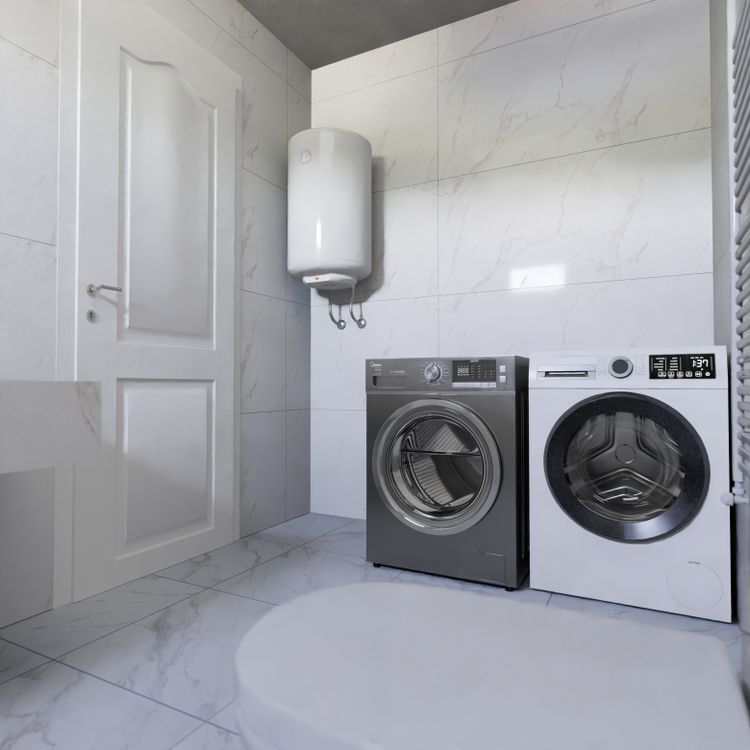
In a typical Orchard farmhouse, the water heater stands in a back utility room that doubles as a mudroom, with a washer, a deep sink and boots by the door. The tank may be forty gallons or less, chosen years ago to fit, and it serves a household that comes in from the fields needing hot water all at once. When that tank starts running out quickly, the cause is often a mix of sediment and undersizing.
The South Platte groundwater that serves Orchard's wells is hard and can carry sulfates. A tank that rumbles, a hot tap that smells of sulfur or a relief valve that weeps are all common complaints, and each has a known fix: a flush, a different anode or an expansion tank.
Questions Orchard Homeowners Ask
How often should I flush on this water? Twice a year is a good starting point in the lower South Platte valley. If the water comes out milky or gritty for more than a minute, keep to that schedule.
Is a softener worth it? For fixtures and appliances, often yes. For the water heater, a softener reduces scale but consumes the anode faster, so the anode should be checked every year or two.
Should I go bigger when I replace?
Planning Around Distance
Orchard sits roughly halfway between Fort Morgan and Greeley, off the main routes. A planned replacement, scheduled before a leak, is far easier than an emergency one. A photo of the data plate, the flue and the gas or electrical connections sent ahead helps the technician arrive with the right tank and fittings.
Orchard Year-Round Care
Flush in spring and fall, test the relief valve at the same time and check the anode every year or two on hard South Platte water. Insulate lines in utility rooms before winter.
Orchard's South Platte Water
Orchard sits near the South Platte in Morgan County, where irrigated farming has shaped the groundwater for more than a century. Wells here often produce hard water carrying calcium, magnesium and sulfates. That combination leaves scale in tanks and can cause sulfur odors when it reacts with a magnesium anode. A water test, a softener if the hardness is high, and an aluminum-zinc anode are the usual remedies, and together they can extend a tank's life by years.
Sizing a Water Heater for Orchard
In an Orchard winter, a 40-gallon gas tank delivers roughly 76 gallons of hot water in its first hour of use, a 50-gallon gas tank about 83, and a 50-gallon electric tank closer to 61. That works out to about 6 back-to-back showers from the 40-gallon and 6 from the 50-gallon before the water turns lukewarm. A 199,000 BTU tankless unit here gives about 4.8 gpm, enough for two showers at the same time.
ZIP codes served: 80649.
FAQs
At about 4,400 feet, a common planning rule puts the gas input reduction near 10%. A 40,000 BTU tank burner then delivers roughly 36,160 BTU/hr, and a 40-gallon gas tank recovers about 37 gal/hr through a 90°F rise. Check the unit's data plate for its certified altitude.
It depends on demand. Inlet water around 50°F plus the altitude derate leaves a 199,000 BTU unit at about 4.8 gal/min of 120°F water, enough for two showers at once.
Every six months is a sensible baseline. On a private well, test hardness every few years and flush more often if the drain water runs cloudy for more than a minute. Replacing a plastic drain valve with a full-port brass one makes each flush faster and more thorough.
Orchard's homes are mostly older farmhouses, with water heaters in utility rooms.
Share your ZIP (80649), whether the unit is gas, propane or electric, a data-plate photo, the heater's location and access, and whether the home uses a well or a small water system.
In a typical Orchard farmhouse, the water heater stands in a back utility room that doubles as a mudroom, with a washer, a deep sink and boots by the door. The tank may be forty gallons or less, chosen years ago to fit, and it serves a household that comes in from the fields needing hot water all at once.
Orchard sits roughly halfway between Fort Morgan and Greeley, off the main routes. A planned replacement, scheduled before a leak, is far easier than an emergency one.
Water Heater Trouble in Orchard?
Independent local installers who know Colorado altitude and water conditions.
No Hot Water? Call Now